

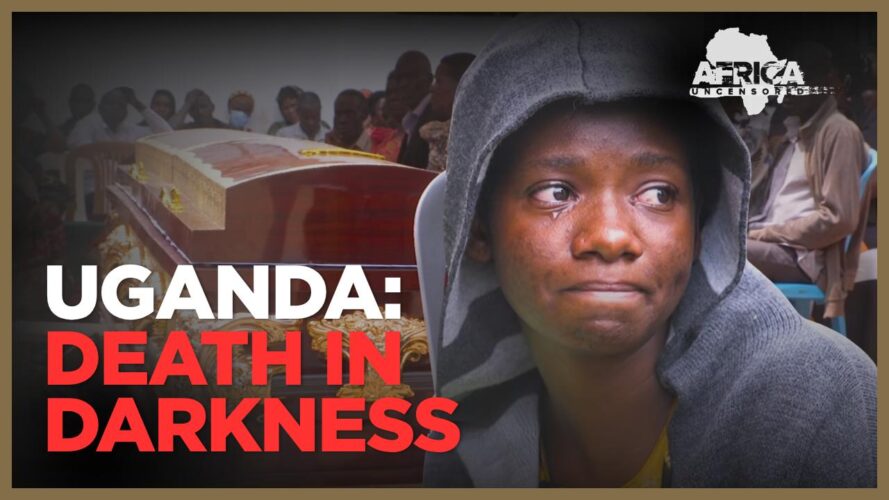
KAMPALA — Three days to Uganda’s January 15, 2026 general elections, the state shutdown internet services to avoid what the communications regulator referred to as misuse of social media to spread false propaganda to spark an uprising.
Opposition politicians and human rights organization described the shutdown as a dark cloud under which the state was going to rig elections and continue to abuse human rights including arbitrary arrests and killings of President Yoweri Museveni’s opponents.
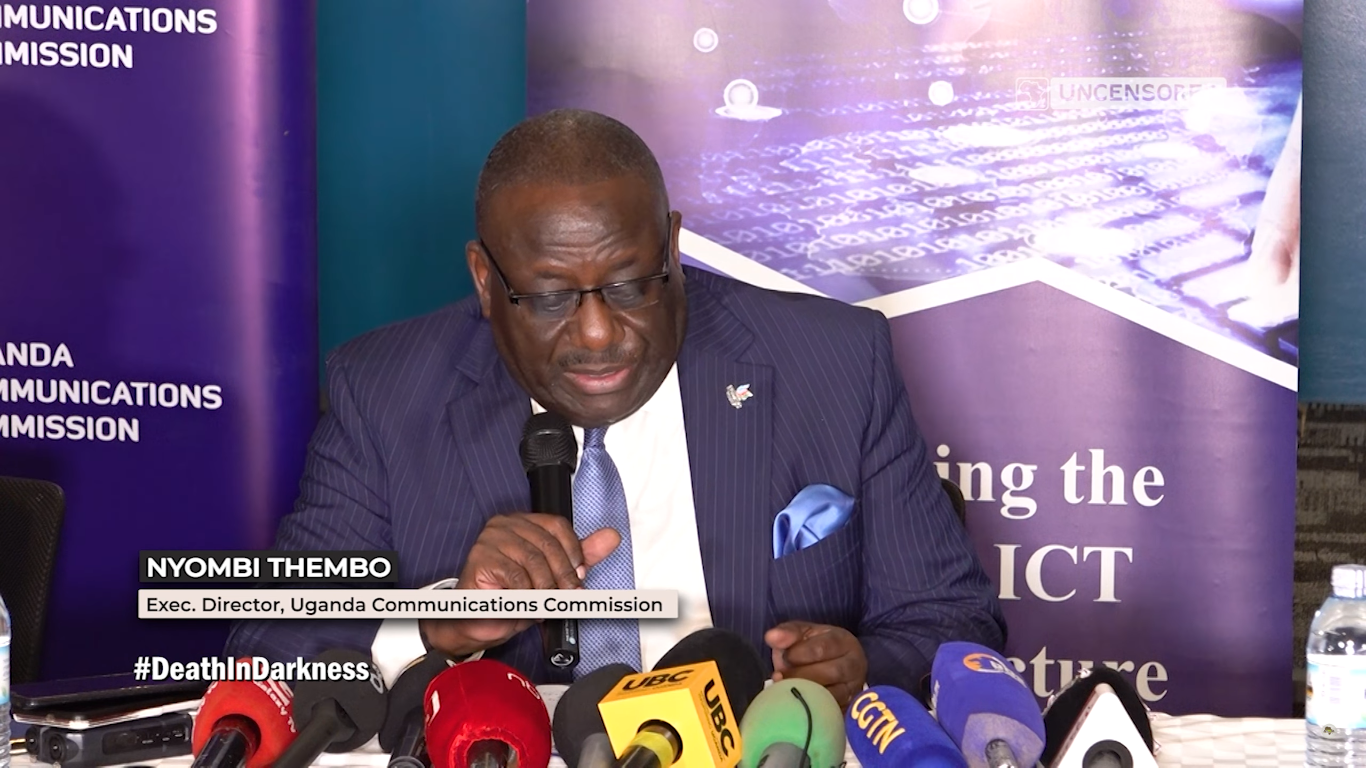
“The Uganda Communications Commission, has directed, all licensed mobile network operators and internet service providers, to implement a temporary suspension of the following services, public internet access, sale of new sim cards, in respect of legitimate aim, protecting national security, safety and public order,” Nyombi Thembo, Executive Director of Uganda Communication Commissions told reporters on the evening of January 13, 2026
Robert Kyagulanyi also known as Bobi Wine, Museveni’s main challenger in the elections described the shutdown as the latest weapon that security services were going to use to crack down the opposition.
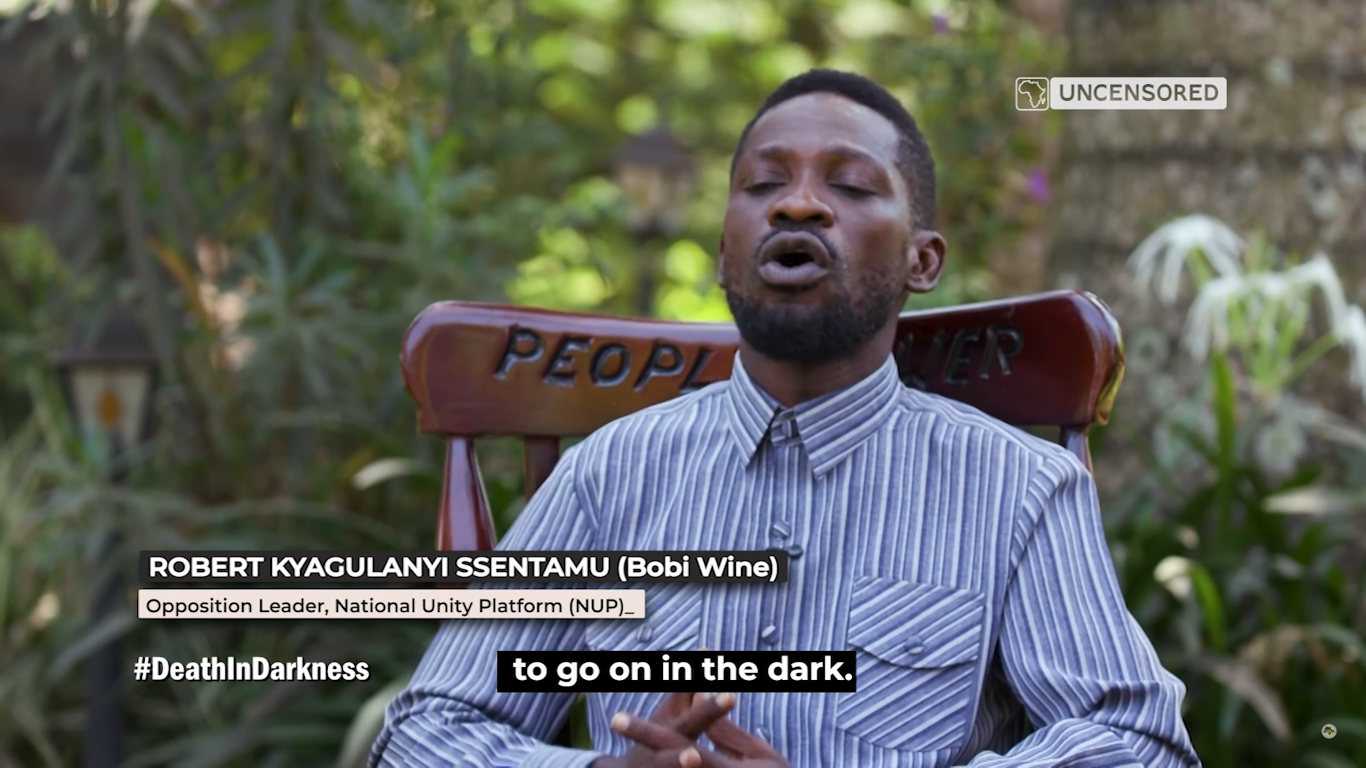
“The regime in Uganda has switched off the internet because they want everything to go in the dark, they are very aware of what they want to do, to rig the election, to brutalize people to kill people, we encourage the young people to find creative ways around this illegal internet blockage,” Kyagulanyi said shortly after the shutdown.
During the shutdown, which lasted five days, election violence and killings mainly perpetrated by security agencies were documented in several parts of the country.
On election day, January 15, three people were killed and thirty-four were reported to have been arrested after protests erupted over election results in the central Ugandan district of Luwero, about 50km north of the capital Kampala.
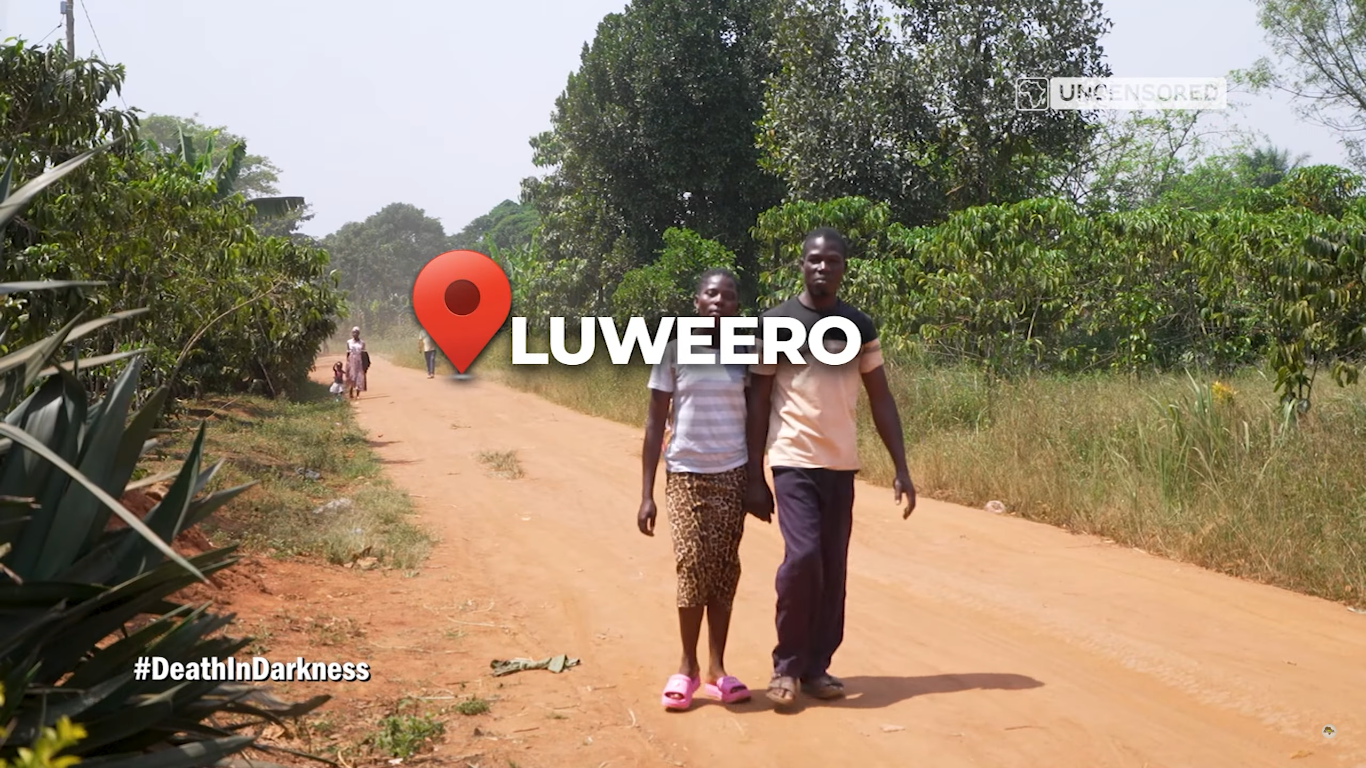
Eyewitness reports say police and the military killed thirty-six year old Sarah Naggayi as they fired live bullets into the unsuspecting masses.
Naggayi was buried the following day as her neighborhood was grip with fear.
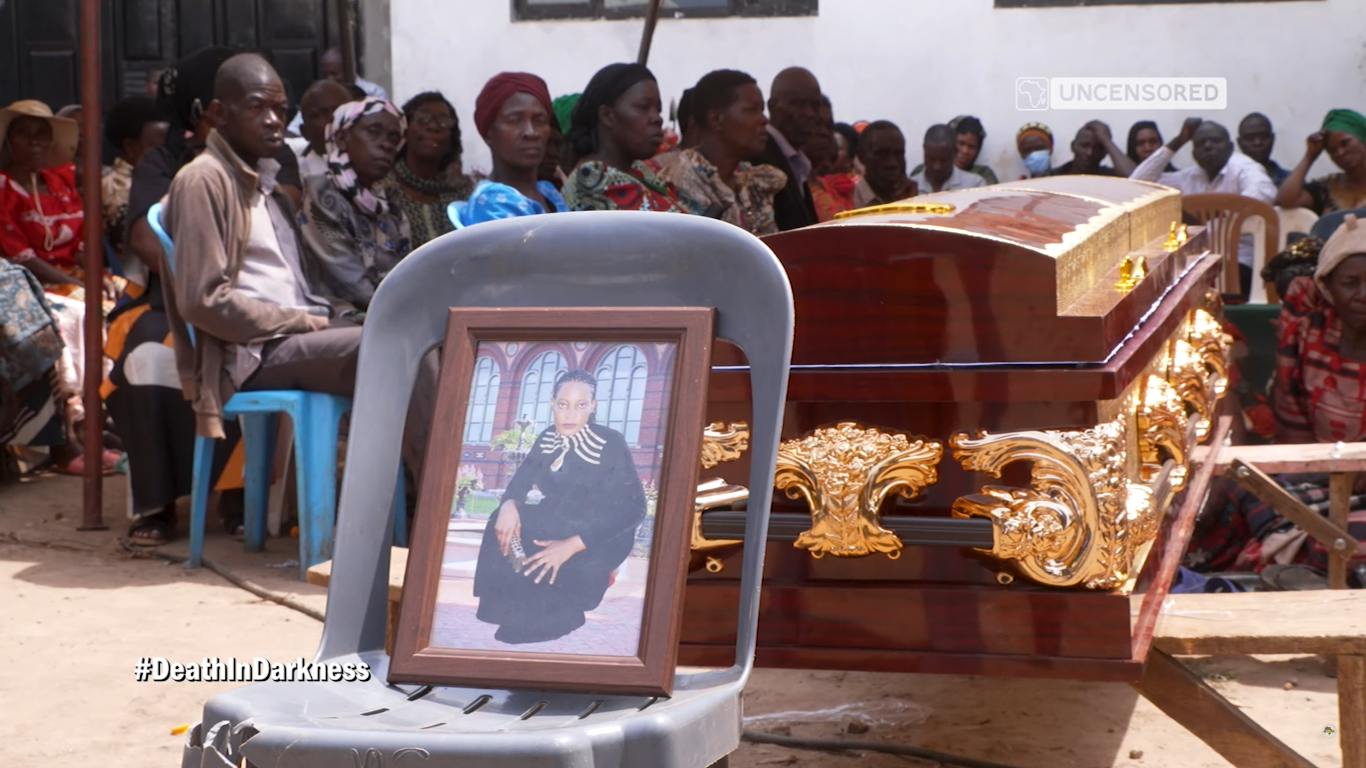
Her brother Samuel Sekitto could not hold his tears back.
“You don’t just speak about this government, innocent people like my sister were killed, she was not protesting, she was just walking on the road,” Sekitto said.
To date, this family is still grieving the loss of a mother, wife, and sister who was killed by the security forces.
And just a stone throw, in Mabaale village, Proscovia Nalweyiso 51, was left with a burden of raising her grandchildren after their father Henry Sserubiri got killed on the eve of general elections.
“There’s no father in this home, am the father and mother, I fend for my children, and now for this toddler am the mother and father, I have to find its school fees and medication,” Nalweyiso said. Nalweyiso is a casual laborer who only survives on handouts.
Her health and well-being has ever since deteriorated as she struggles with different health complications.
Several killings and abuses were recorded in Luwero but there has not been any form of government engagement with the families of the deceased or any form of compensation.
In the early hours of January 16, still under internet shutdown news filtered in of killings of civilians by the military in the central district of Butambala, about 50km west of the capital Kampala.
Security accused supporters of opposition member of parliament candidate Muwanga Kivumbi of attacking a polling station with pangas, protesting allegedly his loss of elections
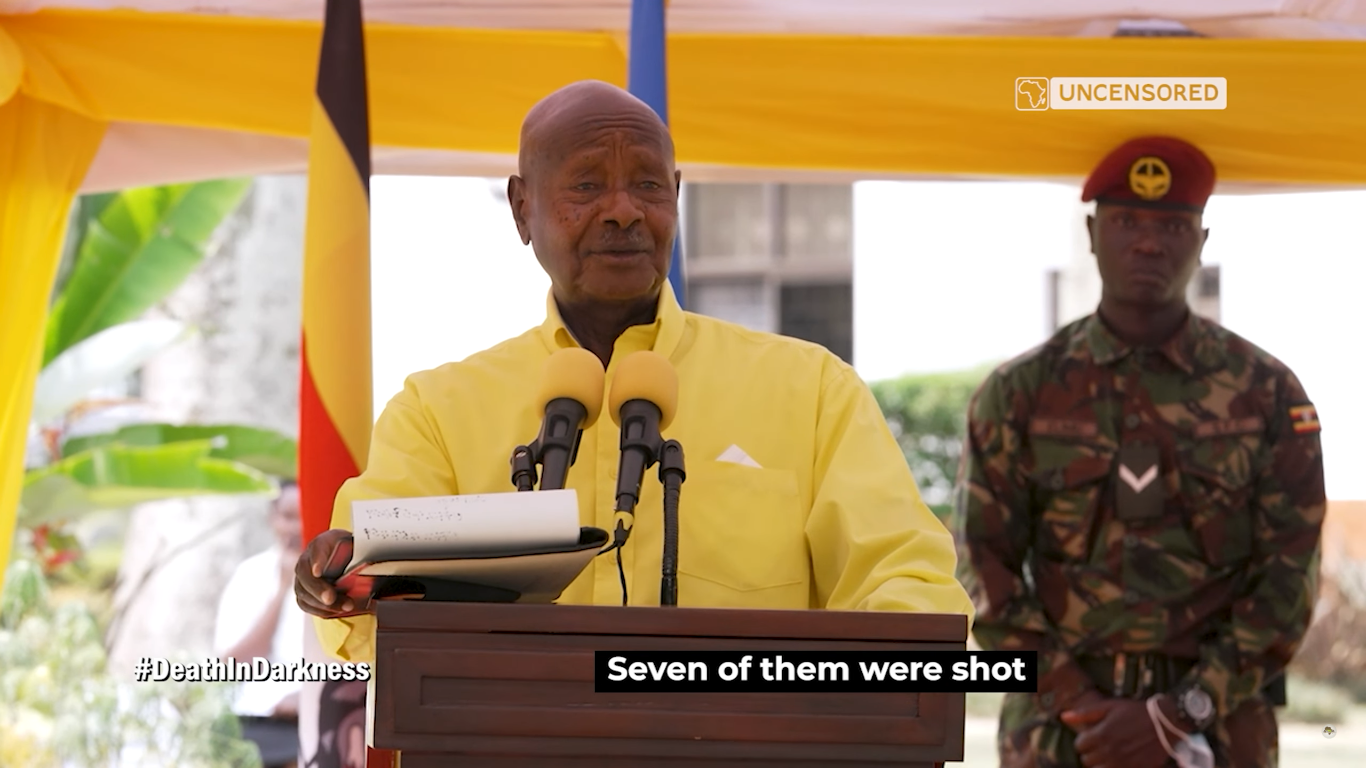
“Kivumbi was defeated, they came with pangas to attack the polling station and they were shot, seven of them were shot dead with pangas,” Museveni said in his victory speech days later after the gruesome incident.
The situation was however far from what Museveni said. The seven people, following the official figures, were killed at Muwanga Kivumbi’s home not at the polling station. They were killed indiscriminately and others injured.
Eyewitness videos show blood stained floor, bullet cartridges, injured victims and perforated walls.
These clearly speak to the fact that indeed several people were shot and killed.
“They are simply trying to run away from a massacre, that was occasioned inside my house, the bottom-line is the president should account, for the dead, the security officers should be arrested, and made to account, because they were on the scene, we have cartridges that were picked in the morning,” Muwanga said in an interview shortly before he was arrested.
Ruth Nakajanko, was a victim of the fateful incident at Muwanga’s home. Her then husband Joseph Kyeyune, is now struggling to explain to his son the whereabouts of his mother.
A conversation quite heavy for him to have.
“I told him this where your mum is… we leave this to God,” Kyeyune said as he pointed at Nakanjako’s grave in the presence of his son.
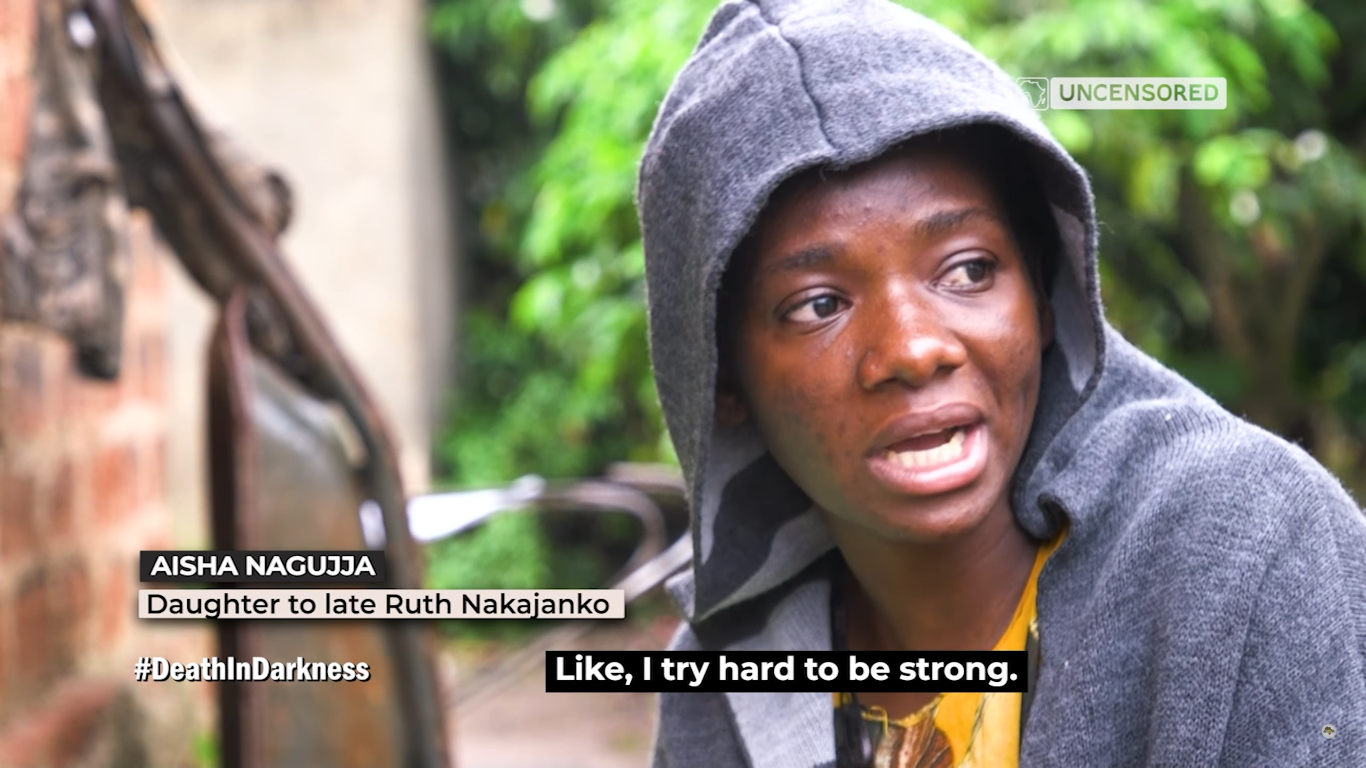
Nakanjako’s daughter Aisha Nagujja is a survivor of the same shooting.
Nagujja says she was among Muwanga’s supporters that day. She witnessed the horror shooting and memories of her mother’s killers still linger on in her mind.
“Since am the eldest, and I have my little sister, and my little brothers, I try to be strong, but it just keeps coming back, when I saw her, the way I tried to wake her up, and those words that the army people said, I keep on crying, hiding myself,” Nagujja said.
Now aged 25, Nagujja is a mother figure in the home.
She is deeply pained by President Museveni’s statements about the killings that day.
“That’s what he said but that’s not true, because I was there, we had nothing, not even a single stone, or stick, we were at home, Honorable’s place,” Nagujja said.
Milly Nampereza, another victim of the shootings at Muwanga’s home was shot multiple times. Nampereza was a single mother of five children.
“Mum was shot with two bullets in the back, on the arm, she had bruises on her behind, she was shot in the thigh, had a wound on the forehead,” Zaitun Nakaweesi, Nampereza’s daughter said.
It was a painful death for Milly; her body was deformed beyond human recognition. Quite dehumanizing, several witnesses said Nampereza’s body was undressed and shamed by the security forces that should have protected her.
Eyewitness accounts and available evidence gathered showed that the atrocities carried out during Uganda’s election process were carried out by the military and police.
Most of the eyewitness accounts came after the state restored internet access. People shared videos of what they witnessed on social media platforms.
Museveni blamed the killings on sections of the opposition who he said were planning violent attacks on polling stations, describing the actions as coordinated efforts to destabilize the country.
The “Death in Darkness” is a memory lane of killings, agony, pain and total lack of accountability of those responsible in Uganda’s election cycle.

Add comment