


By Butros Nicola
JUBA, South Sudan — Ladu Lu Juan, 35, parks his motorcycle taxi outside Custom Market in central Juba, one of the city’s busiest commercial hubs. Within minutes, a passenger climbs on and begins talking about Vice President Riek Machar’s ongoing trial. “They have overwhelming evidence against him,” the passenger says, “but his lawyers are stalling.”
Lu Juan wants to believe South Sudan’s first vice president will finally face justice for the Nasir crisis that happened early this year, and that the country would move towards a fairer society.
“I thought that the trial would be the beginning of establishing justice and holding perpetrators accountable regardless of their positions,” Lu Juan said.
But he cannot verify anything. The government banned all independent journalists and media houses from covering the trial, leaving only state-owned media with access—access that was later withdrawn entirely, leaving no coverage at all.
The trial began September 29, 2025, at Freedom Hall in Juba, less than five kilometers from both Custom Market and the University of Juba. On September 11, President Salva Kiir suspended Machar from his role as first vice president. On the same day, the Minister of Justice announced charges against Machar for murder, treason, and crimes against humanity related to the Nasir crisis.
“Before the Minister appeared at the press conference, a rumor spread about the trial, especially after the Nasir massacre,” Lu Juan says. “All the conversations and accusations were directed at him for a period of time. This, in my opinion, was the prelude to public opinion for this trial.”
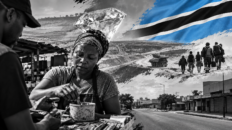
Across the same market, *Mary Akol, 28, hears different stories. A vendor at Custom Market, she receives information through two main sources: customers and a WhatsApp group connecting South Sudanese across different countries—sources that have replaced newspapers.
On her phone, encrypted messages circulate claims she cannot verify: “Defense witnesses are being intimidated into silence.” Another message alleges that “soldiers have surrounded the court to protect the prosecution.” Akol sees the trial as political persecution, another weapon to sideline Machar.
“We have been very curious about what’s really happening there, because the high military presence—only people on foot are allowed to pass—gives more reason to pursue the gossip,” Akol says. She and other vendors have been affected by street closures near Court Avenue, where the trial takes place. The market’s main street, which connects three roads, is among those blocked.
The variations in information she receives confuse her and raise deeper concerns. “When you keep hearing the same story from different people, you start to think maybe it’s true,” she says, glancing toward Freedom Hall. “It’s like the truth is hidden somewhere behind those walls. What we hear depends on who you ask.”
The Association for Media Development in South Sudan (AMDISS) condemned the media ban, joined by other human rights groups in the country. They described the action as a direct assault on the fundamental right to a free press and an independent judiciary. The ban created an information vacuum that quickly filled with rumors traded over motorcycle taxi rides and WhatsApp groups.
The boda-boda driver as unwitting newsroom
Mad Gabriel, a Doha-based political researcher and analyst, says men like Lu Juan often become “unwitting broadcasters of political emotion.” He explains that in Juba’s public transport culture, every rumor picked up at a ministry, church, or tea place travels through drivers and passengers, becoming an oral network that substitutes for official information.
“The boda-boda driver becomes the people’s newsroom,” Gabriel says, “but one where no one can verify the headline.”
Lu Juan confirms this pattern. “Due to my work as a boda-boda driver, the passenger is often the one who takes the initiative to talk about the course of the trial,” he says. ” Some of these people have relationships in decision-making places. I also find news from some friends working in the media field and sometimes on social media, although the latter is full of unverified news—mostly personal opinions and writings that lack credibility.”
For Lu Juan, his passengers feed him stories that reinforce the trial’s legitimacy. For Akol, her customers and WhatsApp groups share theories about rigged proceedings. Neither knows what actually happens inside the courtroom. In a country where two civil wars killed hundreds of thousands along ethnic lines, these diverging narratives carry consequences beyond legal arguments.
Akol worries that unverified claims “can deepen ethnic and political divisions.” According to the Collaboration on International ICT Policy for East and Southern Africa (CIPESA), reports on online harms in South Sudan note that encrypted platforms such as WhatsApp and Facebook Messenger already fuel tensions in the country’s social media landscape.
In one of her WhatsApp groups, Akol received a forwarded voice note claiming that “Machar’s defense witnesses have been detained to stop them from testifying.” She admits no one can verify such information but explains the psychological effect of repetition through trusted channels.
Gabriel describes this as “algorithmic intimacy”—a pattern in which people trust messages that come through private, familiar channels more than public broadcasts. “Mary isn’t naive,” he says. “She knows the difference between rumor and reporting, but she also knows her community’s voice is the only one she can hear. When trust in national institutions collapses, digital groups start to feel like small republics of belief.”
He warns that this dynamic, if left unchecked, risks creating “parallel publics” that no longer share common facts about South Sudan’s future. “In Juba’s public transport culture, every rumour picked up at a ministry, church, or tea place travels through drivers and passengers—it becomes an oral network of legitimacy,” Gabriel says. “This network substitutes for official information, especially when citizens feel the government speaks only to itself.”
The media blackout has not only silenced journalists; it has blurred the line between evidence and belief. Lu Juan and Akol represent two sides of public opinion in Juba—one inclined to see the trial as legitimate prosecution, the other as political persecution. Both opinions rest on fragments of information, second-hand accounts, and stories that change as they pass from person to person.
When shadows replace facts
As Machar’s trial proceeds behind closed doors through November with no announced end date, the question extends beyond the vice president’s guilt or innocence. The information vacuum tests whether South Sudanese can maintain a shared understanding of reality in their fragile nation.
Lu Juan’s passengers come from various government ministries, churches, and tea shops around Juba. The information they share reflects what they hear in their own circles—some supporting the prosecution’s case and others against it . Akol’s WhatsApp groups connect South Sudanese across borders, including diaspora communities who view the trial through the lens of historical ethnic tensions between Dinka and Nuer communities.
Neither protagonist can access verified facts. State media, which initially had exclusive access, no longer covers the proceedings. International media cannot enter. Local journalists face arrest if they attempt to report. This creates conditions where belief systems, not evidence, shape public understanding of one of South Sudan’s most significant political events since independence in 2011.
Gabriel warns that if South Sudan continues to criminalize information access, it risks building “a society that debates shadows instead of facts.” In markets and group chats, what passes for truth is crowdsourced, reshaped, and recycled—a fragile currency in a country still trying to rebuild trust after civil wars that displaced millions and destroyed much of its infrastructure.
The closure of streets around Freedom Hall—ostensibly for security—reinforces the sense of secrecy. Vendors like Akol see heavy military presence but receive no official explanation for troop deployments. Motorcycle taxi drivers like Lu Juan navigate blocked roads but hear only passenger speculation about what happens inside.
South Sudan gained independence from Sudan in 2011 after decades of conflict. Almost immediately, internal tensions between President Kiir’s government and forces loyal to Vice President Machar erupted into civil war in December 2013. A peace agreement in 2018 brought Machar back as first vice president, but the relationship remained fractious.
The Nasir crisis in early March 2025, and Machar’s subsequent suspension and trial represent the latest fracture in this troubled partnership. How South Sudanese perceive and discuss this trial—in the absence of verified information—will shape political alignments and ethnic relations for years to come.
Lu Juan continues driving his motorcycle taxi routes, collecting passenger theories about witness testimony and evidence. Akol continues selling goods at Custom Market, checking her phone for new WhatsApp messages about courtroom developments. Both want to understand what happens at Freedom Hall. Both must rely on rumors.
Until transparency replaces secrecy, Machar’s trial will remain more than a legal proceeding. It stands as a test of whether South Sudan can share one national narrative—or whether competing rumors will deepen the divisions that have already cost this young nation so much.
This story was published in collaboration with @Egab.
Butros Nicola is a South Sudanese freelance feature writer and podcaster with a keen interest in the interplay between arts, culture, and social change. Nicola’s published works examine the experiences of conflict, displacement, modernization, and migration in South Sudan, providing nuanced narratives that illuminate the human consequences of these transformative processes.


Add comment